Blog launched: November 10, 2009
Showing posts with label bird. Show all posts

Saturday, March 21, 2026

Delichon urbicum

304_5212 [Delichon urbicum]
 
Swallows are the harbingers of spring,
symbolizing the rebirth of nature
and the end of winter.
Since we’re officially entering spring today,
I’m sharing these timely photos with you.
 
 
304_5188 [Delichon urbicum]


304_5198 [Delichon urbicum]
 
I love swallows
but I haven’t seen them around yet this year.
 It’s probably because of the unusually unfavorable weather conditions
we are experiencing this year.
 So,
these older photos taken in Oropos a few years ago
will hopefully bring the spring message.


Saturday, February 21, 2026

Larus michahellis flying over Athens

304_3846 [Larus michahellis]
 
 A swarm of birds crossing the sky of Athens and going … I have no idea where!
 
The more I looked at them in the sky, the more they reminded me
of … a group of fighter aircraft on mission flying in a V formation!
 
What disagreed with my imagination, though,
was that two birds were out of alignment,
unlike fighters which are always perfectly aligned to each other
when flying in a V formation.
 
So later, in the post processing stage,
making use of “poetic license”
I relocated the two birds in the frame
so that they would match the image I had imagined!
 
As to the name Larus michachellis,
it refers to the big, handsome, Mediterranean sea-bird we call a "Gull".
 
It is relatively easily identified
from its grey back, white head, long black wingtips, pale to deep yellow legs, and vivid yellow beak.
 
It may live up to 10 years with a varied diet 
that consists mainly of aquatic animals, but also of plants and leftovers!


301_9011 [Rarus michahellis]

 A mature bird in flight


301_9039 [Larus michahellis]
 
Scanning the sea from above for a fresh fish.
No preference for a specific kind or size! Any will do!


302_9138 [Larus michahellis]

A juvenile exploring the aquatic environment.
Juvenile gulls have to wait for up to 4 years since birth
before they are considered adults! 


304_4486 [Larus michahellis]

In search for food on the mainland, far from their natural environment, the sea. 
 
Are they fed-up with their daily fish diet
or are they starving to death and are desperately looking for food
on unexplored territories?  


Saturday, January 24, 2026

Acrocephalus arundinaceus


Acrocephalus arundinaceus,
known as “Reed warbler” in English or “Τσιχλοποταμίδα” in Greek
is a small but visibly larger bird than the well-known sparrow.
 
It is a migrant that leaves the tropical Africa in Summer and arrives in Europe
where it stays until September.
 
Although it is considered ‘a reed bird’,
it usually avoids tall and dense reeds.
Instead,
it is seen in low reed vegetation
found in lakes, canals or small streams.
 
Its diet consists mostly of larger insects.
 
Its nest is a deep cavity of grass and reed leaves
fixed between vertical reed stems above the surface of the water.
 
A rather solitary bird that lives up to 5 years.
 
 
302_7519 [Acrocephalus arundinaceus]

The pictures were taken at the banks of Lake Kerkini
in Northern Greece.


Saturday, June 21, 2025

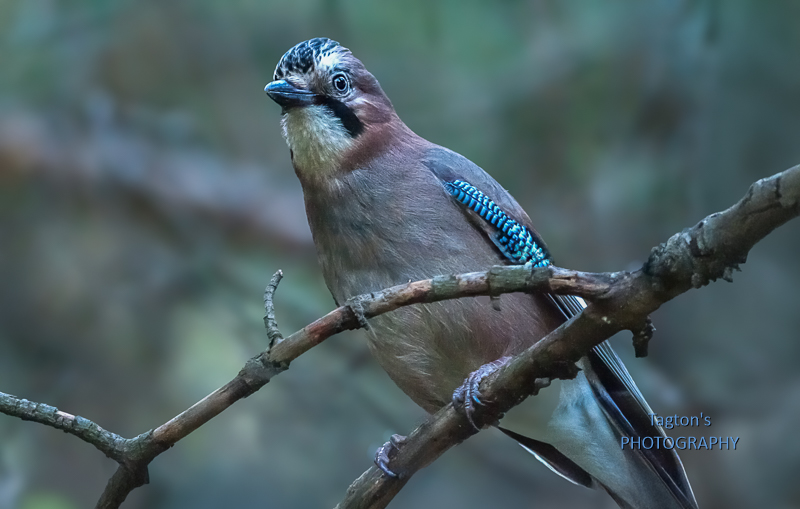
Garrulus glandarius

304_4162 [Garrulus glandaurus]
 
This impressive bird is usually found in woodlands
and sometimes in parks and in large gardens
throughout most of Europe.
 
It feeds mainly on insects, seeds and especially acorns
that it seems to like most.
In Autumn it collects as many acorns as it can find,
carries them in a pouch under its throat
and buries them in the ground
to eat them in harsh winter days and perhaps in Spring!
 
Mature birds vary in length from 32 to 37 cm and may live up to 5 years.
 
Photographed on Mt. Hymittos.


Saturday, April 5, 2025

Motacilla flava feldegg

304_5278 [Motacilla flava feldegg]
 
This is an elegant, colorful and highly distinctive small bird
widespread in South East Europe.
In Winter they emigrate to tropical Africa.
 
They feed on insects, spiders, worms and the like.
So, they prefer finding their food in damp fields
and in pastures with grazing livestock.
They apparently know that livestock will dislodge insects
from the ground making them more vulnerable to the birds.
 
Length: 17-18 cm
Lifespan: up to 5 years
 
Photographed near the Oropos wetland in Attica.


Saturday, March 29, 2025

Motacilla alba

303_1052 [Motacilla alba]

 
A common European bird that emigrates to southern, warmer, areas in Winter.
 
It is often seen feeding in and around towns
where it nests in recesses, hollows, cracks in walls or in damaged roof bricks.
 
It feeds on insects that it catches on the ground or on roofs
and likes to be near lakes, rivers, reservoirs and canals.
 
When it runs or stands, it constantly moves its tail.
 
It is about 18 cm long and lives up to 5 years.
 
And between you and me … it is one of my favorite birds!!!


Sunday, October 20, 2024

Alectoris chukar

304_0580 [Alectoris chukar]

 
Alectoris chukar is a game bird common in Middle East countries.
In Greece, it can be found on remote and rugged rocky areas
in most parts of the country but not in NE Greece.
 
I have come upon them only twice; on rocks near Sounio
and on Mt. Hymittos where they seemed to be enjoying food
they were provided by humans!
 
The Chukar is the national bird of Pakistan and Iraq.
 
This picture was taken near Cape Sounio.


Saturday, August 17, 2024

Psittacula krameri

300_7157 [Psittacula krameri]

 
A lovable bird that often visits our garden
 
For older posts with additional pictures and some info please click HERE.


Saturday, January 27, 2024

Phoenicopterus ruber

303_9697 [Phoenicopterus ruber]
 
Flamingos:
This extraordinary, easily recognizable bird needs no introduction
but it’s good to remind that its family includes
very few species scattered worldwide,
of which only the Greater Flamingo (above) appears in Europe.
 
Being a migratory bird, it often visits Greece,
especially the island of Lefkada during the autumn and winter months.
It gets 1.20 - 1.50m in height, with a wingspan of 1.40 - 1.65m
and lives about 30 years!
Flying speed? A flock can reach 60km/h
and cover a distance of 600km in a night!
 
That said, I am tempted to confess
that I was ashamed not to know where they get that characteristic pink/reddish color,
until I found they get it through carotenoid pigments in their food.
That was a frightening discovery!
Do I run the danger of getting a pink face, I wonder,
if I keep eating carrots??? 
🤣
 
The picture was taken in Attica Zoological Park.
 
Clicking on the picture you can see it in higher resolution.


Saturday, November 26, 2022

Pica Pica

IMG_1242 [Pica pica]

 
A striking, black and white, easy recognizable bird that flies all over Europe.
 Although it is a sociable bird, this was the first time a Pica let me approach it that close and take the shot.
 
Photographed on Philopappou Hill, opposite the Acropolis, in Athens on October 12, 2022 


Saturday, October 8, 2022

Anser anser

302_4663 [Anser anser]
 
This grey goose is the direct ancestor of the domestic goose.
 
It was photographed in “Tritsi’s Park” in Athens on March 21, 2010


304_3971 [Anser anser]

 
Photographed on lake Beletsi on Mt. Parnitha on February 26, 2014


Saturday, September 3, 2022

Ciconia ciconia

801_7698 [Ciconia ciconia]
 
Ciconia Ciconia is one the Europe’s largest and most easily recognized birds. It is still widespread in European countries but its population is declining due to intense farming and increasingly drying wetlands where it feeds on small rodents, frogs, small fish and the like.
 
The bird in the picture was seen to be flying in the skies of the Northwestern suburbs of Athens where it was photographed back in 2014.
 
For a Ciconia family please click on older post here.


Saturday, August 27, 2022

Oenanthe oenanthe

304_4726 [Oenanthe oenanthe]

This bird (about 15 cm long) lives in open places such as meadows, dunes, or pastures.
It constantly moves and swings its tail, opening it like a fan.
It nests in wall holes, piles of stones or holes in the ground,
it feeds on insects and as almost all birds spends winters in Africa.
 
In the case above it “landed” on a wooden statue on Mt. Parnitha
where it was photographed back in May, 2014 


Saturday, August 13, 2022

Psittacula krameri

300_7063 [Psittacula krameri]

 
Photographed in Holargos on March 25, 2022


Saturday, July 30, 2022

Cairina moschata

303_1405 [Cairina moschata]
 
Cairina is a tropical bird but due to its ability to adapt easily to cooler climates,
it can be found in America, New Zealand, Australia, and in parts of Europe. 
 
It was photographed in Lake Beletsi on Mt. Parnitha in Attica Greece. 


Saturday, June 18, 2022

Erithacus rubecula

304_4182 [Erithacus rubecula]

 
303_5921 [Erithacus rubecula]
 
The bird in the upper picture looks bigger than it is. In reality, it is slightly smaller than the well-known sparrow which we are familiar with.
It is very common and widespread throughout Europe and nests in forests, bushy areas, parks and gardens. Not very social in its own “society”, as it is always found isolated and never in groups. It builds its nest usually in the ground, in holes or on bushes.
 
Its name refers to the distinctive orange-red color on its head and breast.
 
Both pictures were taken on Mt. Hymittos.

Saturday, April 3, 2021

Delichon urbicum

304_5205 [Delichon urbicum]
 
I love these little birds [12-13cm]. Probably because their arrival in my country is asssociated with Spring, my favorite season.
 
Bird books report that every year Delichons leave South Africa and fly for more than 10.000 km over the Sahara desert and the Mediterranean Sea to reach southern Europe at Spring time where they can enjoy favorable Spring weather conditions. Unfortunately, due to peculiar circumstances this year, I haven’t seen them around yet but I am sure they have come and have already started collecting mud to build their nests on house-walls in urban areas.
 
 
304_5208 [Delichon urbicum]
 
A Delichon at work: collecting mud for the nest.
 
Photographed at Oropos on April 06, 2015
 

Saturday, March 13, 2021

Garrulus glandarius

300_6971 [Garrulus glandarius]
 
This impressive bird is usually found in wooded areas and sometimes parks and large gardens throughout most of Europe. Surprisingly, however, this morning it came to our small home garden where I grabbed the opportunity to take the picture.
 
It feeds on insects, seeds and especially acorns that it seems to like most. In Autumn it collects as many acorns as it can find and buries them in the ground to eat them in harsh winter days and perhaps in Spring!
 
Mature birds vary in length from 32 to 37 cm.
 
Photographed from the balcony of our apartment in Holargos on March 6, 2021.

Saturday, July 25, 2020

Alectoris chukar

803_4559 [Alectoris chukar]


Photographed on Mt. Hymittos on April 11, 2019

For other pictures of a chukar please click HERE.


Saturday, December 14, 2019

Psittacula krameri

304_5098 [Psittacula krameri]


304_5107 [Psittacula krameri]

This parrot species mainly lives in the natural environment of Africa and South Asia but it has also been introduced into populated areas of Europe and The Middle East. Some of them seem to have reasons to like our garden as they visit it at least once a year.


Both of these pictures were taken from the balcony of my apartment

in Holargos on November 14, 2014