Blog launched: November 10, 2009

Friday, August 18, 2023

Papilio machaon

801-9864 [Papilio machaon]
 
Papilio machaon - a common but beautiful butterfly - is resting
on a Phlomis fruticosa plant and collecting energy from the sun
so that she has enough “fuel” for the rest of the day.
 
Wingspan 70-80 cm
Flight period: February to November


804_0427 [Papilio machaon]
 
machaon’s caterpillar
 
Photographed on Mt. Hymittos in 2022


Saturday, August 12, 2023

Asphodelus fistulosus

804_0616 [Asphodelus fistulosus]

 
Asphodelus fistulosus thrives in any area with a Mediterranean climate.
It can be found as a common weed in pastures, roadsides and rocky areas of many countries of Europe, or as an invasive noxious weed with significant infestations in various parts of the USA
and other countries!
It is a short-lived perennial that usually reaches the height of 70 cm
and produces white flowers that open during daylight hours
and close at night or in low-light weather conditions.
 
Livestock avoid eating it,
so, undisturbed, it gradually occupies any available space in its habitat.
(See below).
 
 
3031636 [Asphodelus fistulosus]

 The pictures were taken at the foot of Mt. Hymittos on March 24, 2023.


Saturday, August 5, 2023

Lepista nuda

304_0951 [Lepista nuda]

Lepista nuda is a very common mushroom that occurs in Autumn - 
rarely in early Spring - in parks, forests, gardens, roadsides, etc.
 
In some mushroom-related literature,
it is mentioned that it is edible and that it has a pleasant fragrant smell.
 
Between you and me … 
I have never tasted it and I will never do; I am sure you know why!
 
Photographed in Athens botanical garden at the foot of Mt. Egaleo.


Saturday, July 29, 2023

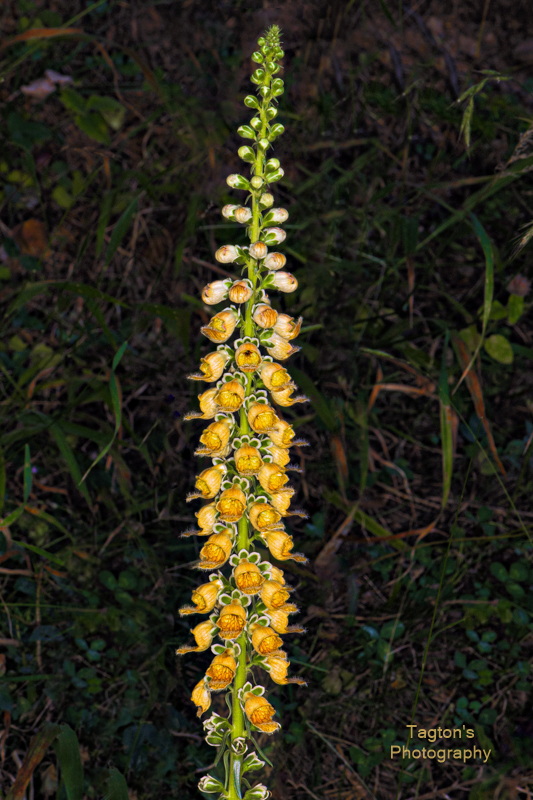
Digitalis ferruginea

301_2879 [Digitalis ferruginea]
 
Digitalis ferruginea is a short-lived flower (usually 2-3 years)
found in South Europe and West Asia.
In Greece,it is present in most parts of the mainland
in habitats like open areas of forests and meadows in heights of up to 1500m.
It grows to 1.5m, blooms in July and produces rusty-colored flowers.
(Its name derives from the Latin word ferruginea that means “rusty colored”.)
 
Caution:
If you ever see it and feel tempted to touch it,
please keep in mind that it may cause allergic reaction.
If you insist,
the use of gloves might be a good idea.
 
The picture was taken on Mt. Taygetos.
 
 
304_3138 [Digitalis ferruginea]
 
From Mt. Oiti


Saturday, July 22, 2023

Epipactis helleborine

302_0467 [Epipactis helleborine]
 
Epipactis helleborine is a species of wild orchid found in Europe and Asia.
In Greece, it flourishes from June to August in shady places
-usually in forests- on heights of up to 2000 m.
It gets 20-100cm tall and bears 10-100 flowers that vary greatly in color.
They can be green, dark red or almost white.
 
This picture was taken on Mt. Olympos on July 10, 2009.
 
 
303_3812 [Epipactis helleborine]
 
From Mt. Parnitha July 15, 2011
 
 
303_3812 [Epipactis helleborine]

 A closeup on the above picture


Saturday, July 15, 2023

Half a sun umbrella

Umbrella
 
In Greece, we are experiencing unusually high temperatures these days
and everyone is looking for countermeasures to protect themselves.
Bard, Google’s Artificial Intelligence robot,
recommends for the case drinking plenty of fluids, staying in cool places, dressing lightly,
wearing a hat and sunglasses, taking frequent cool showers or baths, avoiding vigorous exercise,
and frequently checking up on the elderly.
 
With Bard’s permission, I add to this list the use of a sun umbrella
and hope we keep in mind that under certain conditions
even half an umbrella (see above) may prove more effective than no umbrella at all!
😊😊😊
 
 This picture was taken in Venice, Italy, some years ago.


Saturday, July 8, 2023

10+1 Theba pisana

302_0975 [Theba pisana]
 
This little community of snails (Theba pisana) are aestivating
on Mt. Falacro during the hot summer month of July.
Understandable. Summer is not their favorite weather even on high mountains.
What makes me wonder is why 10 of them are so close together, while one is in isolation further away.
Isn’t it in good terms with the rest of the community?
 
July 12, 2009

Sunday, July 2, 2023

Limodorum abortivum

803_8382 [Limodorum abortivum]

This striking plant is a Mediterranean species of a wild orchid at the beginning of its yearly life.
It first appears as a gray-purple, erect stem which will later produce 5-25 flowers
but no green leaves!
Instead of leaves, there appear numerous dark purple scales
wrapped all around the stem. 
 
803_6111 [Limodorum abortivum]
 
In Greece it is found throughout the country from April to July
in meadows, scrub and pine forests.
It may be solitary or in small groups of 1 to 4 plants and a height between 20 and 80cm.
 
This orchid is generally thought to be a saprophyte,
a plant that lives on decaying organic matter in the soil.
However,
it may possibly be a parasite feeding on the tissues of living host plants.


803_6106 [Limodorum abortivum]

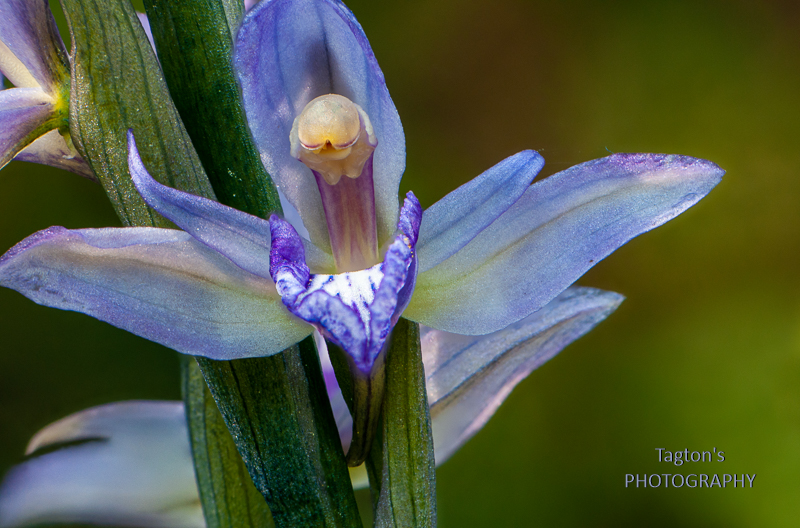
Each stem carries 5 to 25 whitish or blue-violet flowers
that are about 45mm across.

303_3026 [Limodorum abortivum]


304_2690 [Limodorum abortivum]

The pictures above were taken on Mt. Hymittos
and on Mt. Parnitha in years 2020 - 2022.